November 9, 2026 Business Management, Resources
Audit-Ready Clinic Cleaning: Prove Every Room Was Done Right
It is 7:15 AM and a practice manager is calling about last night’s trash. What happens in the next few hours decides whether this is a small slip or the start of a lost contract. Here is how Ranyan and an AI assistant turn every clinic complaint into an owned, verified and measurable fix.
November 9, 2026 Business Management, Resources
Author: Ranyan

When a clinic manager asks, “Can you show me when exam room 4 was last inspected?”, there are really only two kinds of answer you can give.
The first is “Let me get back to you.” Then the scramble begins. Someone digs through a stack of clipboards, texts a supervisor who is already at another site, and tries to piece together a believable timeline by the end of the day. Even when the work was done perfectly, the delay makes it look like it might not have been.
The second is the answer itself, delivered in under a minute: the date of the inspection, the name of the inspector, which items passed, which failed, and exactly what was fixed afterward. For janitorial companies that clean medical clinics, that second answer is what wins renewals and protects contracts. This article explains how AI assistants working inside Ranyan, the janitorial management platform built for cleaning and facility service companies, make that fast, confident answer the normal one instead of the lucky one.
Why Medical Clinic Cleaning Is Different From Office Cleaning
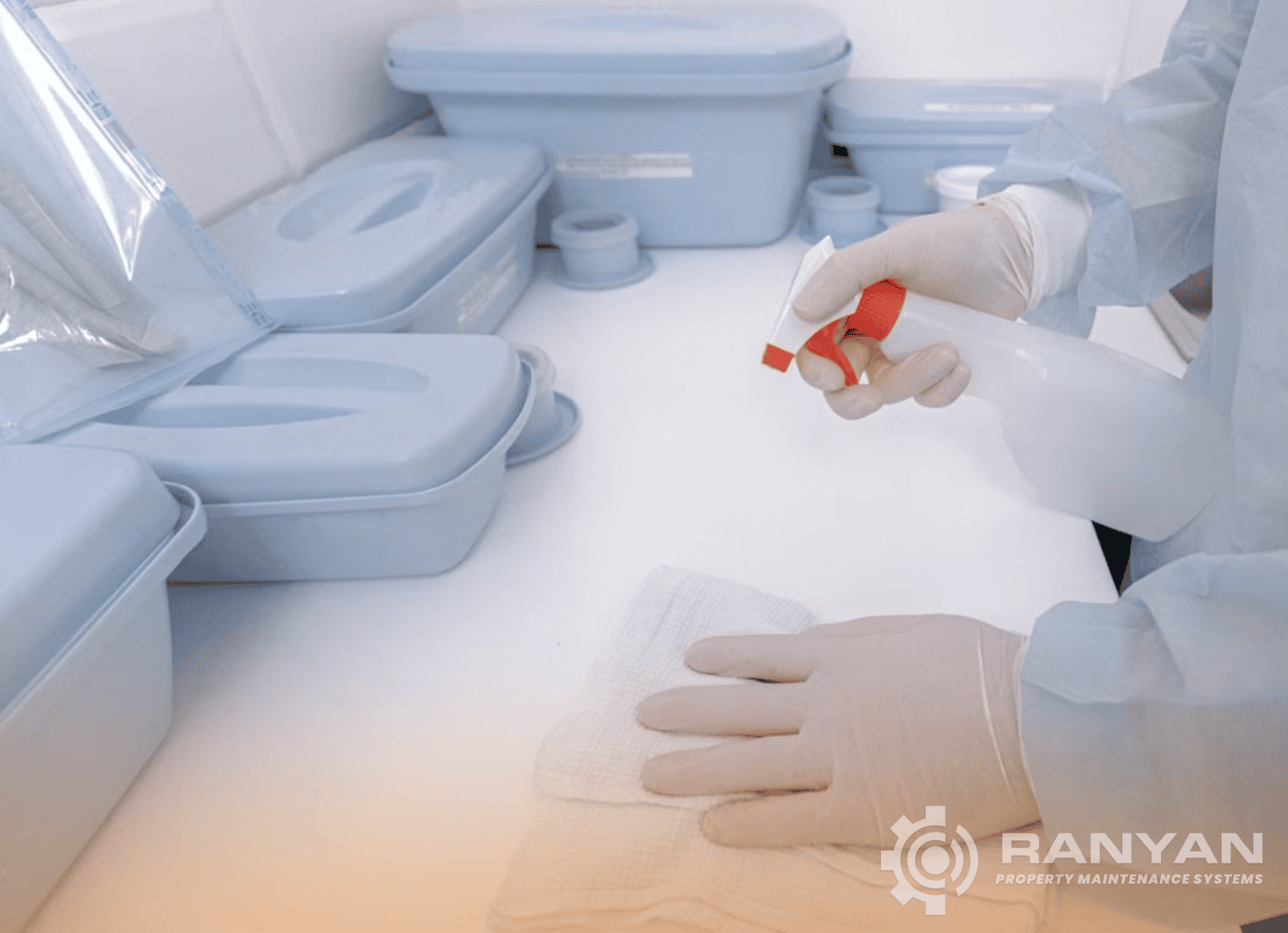
From the hallway, cleaning an office and cleaning a clinic look almost identical. Both involve trash, floors, restrooms and touchpoints. In practice they are very different jobs, and the difference starts with the stakes. A missed restroom in an office produces a complaint. A missed exam room in a clinic is a patient-safety concern, because the surfaces your crews clean are the same ones that patients, many of them already unwell, touch every day. Public health guidance such as the CDC’s Environmental Infection Control Guidelines treats environmental surfaces as part of a healthcare facility’s infection prevention program, which tells you how seriously your clients have to take your work.
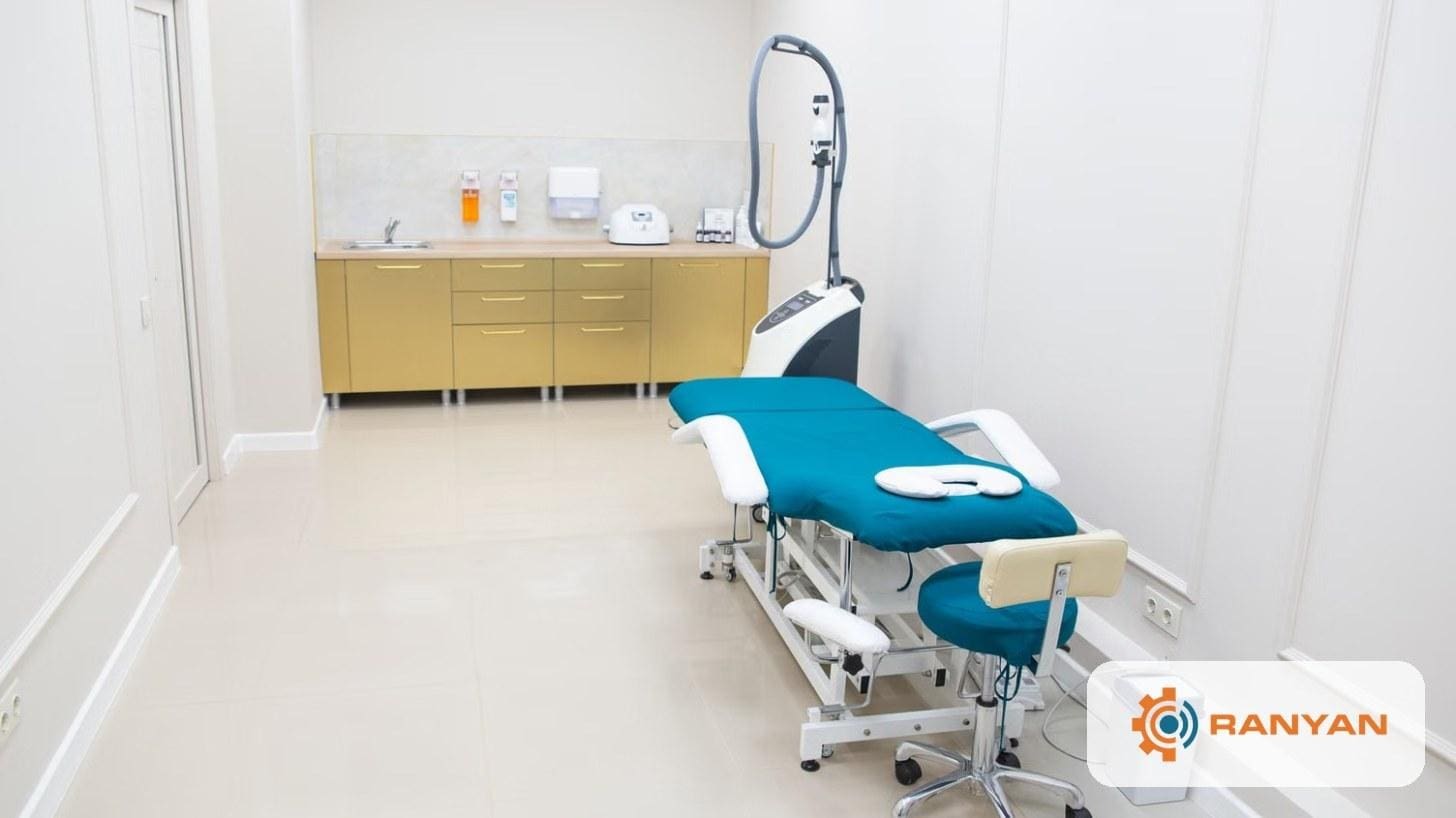
That is also why clinic clients expect proof rather than promises. Practice managers often answer to their own auditors, accreditation reviewers and health system leadership, and when those reviewers ask how the environment is maintained, the clinic needs your records to back up its answer. A cleaning company that can produce clean, dated documentation on request becomes part of the clinic’s compliance story instead of a risk inside it.
Clinic work also demands specialized training. Crews may handle sharps containers, regulated waste and surfaces that could be contaminated with blood or body fluids, which brings standards such as OSHA’s Bloodborne Pathogens requirements into play. General office crews may never need those procedures, so you need a dependable way to know who has been trained before anyone is scheduled into a clinic.
Finally, the paperwork piles up quickly. Inspection sheets, shift sign-offs and training certificates often live in different binders, inboxes and spreadsheets, and none of them are easy to find when a client is waiting on the phone. In most companies the cleaning itself is already happening to a high standard. What is missing is a fast, reliable way to prove it, and that is exactly the gap Ranyan was designed to close.
Where AI and Ranyan Help You Stay Audit-Ready
1. Inspections That Leave a Clear, Complete Trail
In Ranyan, supervisors run quality inspections from templates you build yourself, so the checklist matches the way each client’s space is actually laid out. A clinic template might be organized into Exam Rooms, Waiting Area, Restrooms and Staff Lounge, with specific checklist items under each area. Every item is marked pass or fail, and every completed inspection is saved with its date and scores, which gives you a consistent quality history for every site you service.
What makes this audit-ready is what happens after a failure. When an item fails, Ranyan automatically creates a work order to correct it and carries over the supervisor’s photos and notes, so nobody has to retype the issue or remember to follow up. The record does not stop at “this failed.” It shows what failed, who was assigned to fix it, and when the fix was completed. That closed loop is the difference between a checklist and real quality assurance.

With an AI assistant connected to Ranyan, you can ask for that history in plain English instead of digging through screens. You might ask how Riverside Family Clinic scored on QA inspections this month, which failed items at that clinic still do not have a completed fix, or whether any item has failed at the same clinic several inspections in a row. That last question is the most valuable of all. One failure is a bad night. The same item failing again and again points to a training or process problem, and finding it in your own data before the client notices it is how strong cleaning companies keep their accounts.
2. Shift Sign-Offs Captured in Your Crew’s Own Words
Ranyan’s attestations are short questions your crews answer when they clock in and clock out, and you decide exactly what those questions are. For clinic work, a clock-in question might confirm that the employee is fit to work that day, and a clock-out question might confirm that all exam rooms were completed to the clinic checklist. Each answer becomes a signed declaration attached to that specific shift, which gives you a dated, person-by-person record of what your team confirmed on site.
An AI assistant can pull those declarations up in seconds. Ask it to show every shift at Riverside Family Clinic last week where an answer was flagged, and you get a focused list instead of a pile of timesheets. It can also tell you which shifts have no answers at all and, importantly, why. Sometimes an employee forgot to clock out. Sometimes the questions were never set up for that site. Those are two very different problems with two very different fixes, and a good report keeps them separate so you never blame a cleaner for a configuration gap.
3. Training Records You Can Actually Find
Because clinic crews need training that office crews may not, Ranyan tracks trainings alongside inspections. Before you put someone on a clinic shift, you can confirm who has completed the required training and who still needs it. That protects the client, protects your employees and gives you a ready answer when a practice manager asks how your team is prepared for healthcare environments.

4. Answers While the Client Is Still on the Phone
The biggest change is not any single feature. It is that the answer to “Can you show me?” no longer depends on who happens to be in the office. Anyone with the right permissions can ask the assistant, read the summary and send it on to the client. Account managers, operations leads and owners all get the same accurate view, which makes your company look organized, responsive and trustworthy at the exact moment it matters most.
Where to Stay Careful
Records support your standards, but they do not replace them. An inspection score shows what a supervisor saw during that walk-through. Your clinic procedures, your products and your training still do the real work of keeping patients and staff safe, so treat Ranyan’s data as the evidence of good practice rather than a substitute for it.
It also helps to remember that a skipped item is not the same as a missed item. Templates cover every area of a site, but not every area applies on every visit. A staff lounge that was closed for renovation, for example, may be skipped for a legitimate reason. Make sure everyone reading a report, including your client, understands the difference so a skipped line is not mistaken for a lapse.
Before sending any summary to a client, read it yourself. You know the context that numbers alone cannot show, such as a construction project, a staffing change or a special request from the practice manager. And keep the client conversation human. The assistant gets you the facts in seconds, but how you talk through a problem with a clinic manager, and how you reassure them, is still your job and one of your biggest competitive advantages.
Getting Started With Audit-Ready Clinic Cleaning
Start small with one clinic account. Build an inspection template in Ranyan that matches its rooms, add two or three attestation questions for its shifts, and run a few inspections the normal way so you have real data to work with. Then ask your AI assistant one simple question, such as “Show me this month’s inspections at this clinic.” Once you see how quickly a complete, accurate answer comes back, you will find a dozen more questions worth asking, and your team will start to rely on the habit.
The Bottom Line
Your crews are already doing excellent work in your clients’ clinics. Ranyan and an AI assistant make sure you can prove it the moment a clinic asks, and help you spot weak spots in your process long before they turn into a lost contract.